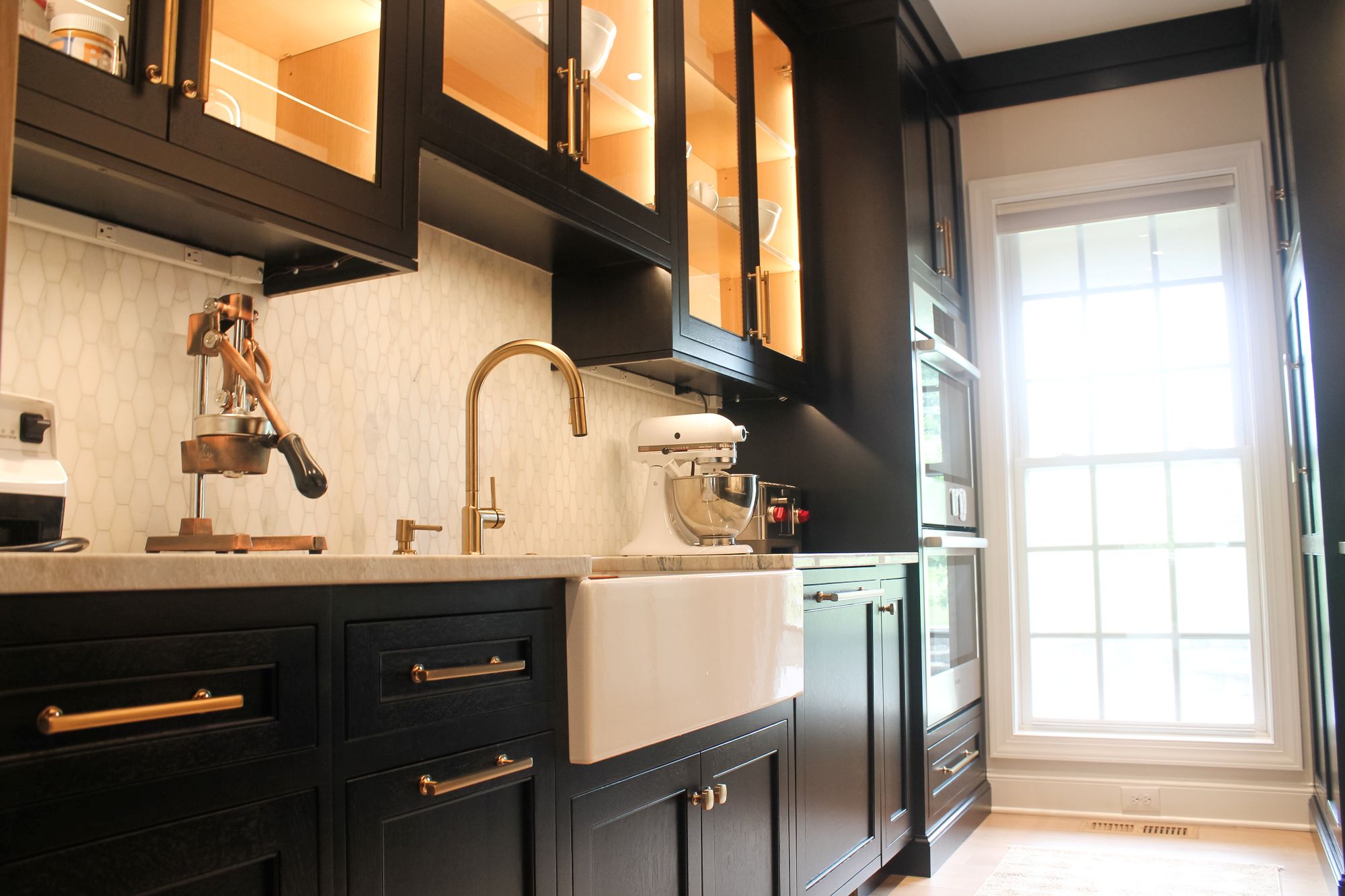
Cleaning Tips for Extending the Life of Your Handmade Kitchen Cabinets
Why do custom cabinet designs require a different level of care than stock cabinet options? And how should you clean and take care of your custom kitchen cabinets?

Longevity. It’s a major selling point with custom cabinetry. And if you’ve recently invested in built-ins for your home, you want them to last as long as possible.
So with this article, our craftsmen are laying out the best practices for extending the life of your new cabinets. By giving it a quick skim, you’ll learn:
- The simple habits that ensure your cabinets last (and look amazing) for decades
- Maintenance routines that even the busiest homeowner can manage
- The best (and cheapest) DIY cleaning solutions for your hardwood cabinets
Let’s make the most of your beautiful custom-made kitchen cabinets. Keep reading!
Why Do Custom Cabinets vs Stock Options Need Different Types of Care?
Before diving into cleaning routines, it’s important to understand why custom cabinet designs require a different level of care over mass-produced options.
Custom cabinetry is crafted from premium materials—typically hardwoods—and features hand-applied, specialized finishes, rather than mass-produced, industrial coatings on cheaper units.
In terms of maintenance, this is important for a few reasons.
- Hand-applied paints, stains, or specialty finishes are often less forgiving than heat-cured laminates (and may be damaged by harsh household cleaners)
- Custom-designed cabinets made from hardwoods are durable, but porous—meaning they need protection from excess moisture
- The intricacy of custom designs (such as raised panels or hand-carved details) can trap more dust and grease than smooth laminate surfaces
So while on the surface it may seem that hardwood cabinets are a bit higher maintenance than their stock counterparts—and they are—we believe the minimal upkeep is well worth it.
Especially when compared to the long-term savings and overall benefits of a premium, custom-tailored solution.
What Are the Best Habits for Preserving Custom Handcrafted Cabinetry?
With just a few simple habits, you can minimize the amount of time (and elbow grease) required for keeping your cabinets in tip-top shape.
In fact, just about all it takes is wiping spills immediately—especially grease and water, both of which can sink into hardwood’s pores and warp or stain the wood.
To make quick work of cleanup, follow these guidelines:
- Use Microfiber Cloths Only: Microfiber is gentle, lint-free, and excellent at trapping water and grease—without scratching cabinet finishes
- Mild Soap + Water: A light detergent and water is the safest (and cheapest) cleaner on nearly every common hardwood finish
- Wipe With the Grain: Wiping with the grain is best for preventing scratches, maintaining the topcoat, and removing dirt from wood’s natural crevices
- Don’t Overclean: Wood finishes are only the thickness of a few sheets of paper, making them easily stripped by harsh chemicals or excess moisture
In other words, some thoughtful wiping is just about all it takes to keep your cabinets in excellent condition for decades to come.

Should I Deep Clean My Cabinets (And How Often)?
Aside from wiping spills as you go, occasional deep cleans are also a good idea—at least a few times per year.
Here are some simple guidelines for keeping your hardwoods looking great for 25 or 30 years.
- Remove surface dust with a duster or microfiber cloth
- Always use gentle cleaners made from mild soap and water
- Avoid ammonia, silicone sprays, and other chemical abrasives
- Use light pressure only, as scrubbing wears down finishes
- Dry immediately after cleaning to prevent warped panels
While cleaning hardwood built-ins is pretty straightforward, homeowners sometimes have questions. If you need help, simply reach out to your trusted custom cabinet builder.
How Else Can I Help Preserve My Custom Built-Ins?
Cleaning cabinet surfaces is a huge step in extending the lifespan of your investment. However, there are a few more habits that go a long way in making the most of your custom-made kitchen cabinets.
- Clean knobs, pulls, and hinges to prevent corrosion and buildup
- Tighten loose hardware at the first signs of wobbling or squeaks
- Use liners under sinks and trash pull-outs
- Control humidity and heat exposure in the home
These tips, combined with the cleaning outlines above, will ensure you’re loving your cabinets for as long as you stay in your home.

The First Step Toward Cabinets You Love For A Lifetime
Keeping your cabinets clean isn’t just about looks. It’s about longevity. And when it comes to extending the life of your built-ins, a little routine care goes a long way.
If you have questions of caring for your cabinets—or finally realizing the kitchen, study, or bathroom built-ins you’ve been dreaming of—reach out to Twin Valley Woodcrafts for a free estimate today.
It’s been over 30 years and our family is still excited to serve Southeastern PA and New Jersey homeowners by providing them with the perfect storage solutions.
To us, that means:
- Elegant solutions built with timeless style
- Cabinetry tailored to your home and lifestyle
- Handcrafted woodworking built for decades of use
If that sounds like the kind of thing you’ve been looking for, get your free estimate today.